What Anthropic’s “Mythos” Means for Web Estates and Accessibility
There’s been a big shift in the AI security world this month and it lands right on the doorstep of anyone responsible for a large web estate.
Anthropic has released Claude Mythos Preview into a controlled programme, after reporting that the model can autonomously discover and exploit software vulnerabilities at a level that could be genuinely dangerous if widely released.
Instead of pushing it out broadly, Anthropic launched Project Glasswing, giving selected organisations access (and offering up to $100M in usage credits) so major platforms can find and fix issues before this class of capability becomes commonplace. Reuters describes the concern bluntly: models like Mythos could accelerate vulnerability discovery and exploitation faster than patch cycles can keep up – especially in complex, legacy-heavy environments.
This big news means security is about to become even more “inventory first.”
Because the hard part won’t just be finding vulnerabilities, it will be knowing where you’re exposed across thousands of sites, subdomains, and third-party services.

Not Creating, but Exposing:
The new problem isn’t “Are there vulnerabilities?” But rather “Where are our vulnerable technologies hiding?” They were always there, just harder to detect.
Most universities and large organisations have hundreds or thousands of websites; plus:
- subdomains that different teams spun up years ago
- legacy CMS installations
- old JavaScript libraries that never got replaced
- third-party services bolted on over time
- “temporary” microsites that quietly became permanent
And when something like Mythos exists (a system purpose-built to spot weak points) the risk is no longer abstract. It’s simply that unknown or unmanaged tech becomes the easiest target.
There’s also commentary flying around about this moment – including arguments that it “breaks cybersecurity”, but in a structural way: the balance between attackers and defenders shifts when vulnerability discovery becomes massively cheaper and faster.

What Anthropic’s approach signals
From Anthropic’s own red team material, Mythos Preview has been used to autonomously identify and exploit vulnerabilities, including examples like remote code execution, and to share findings responsibly with maintainers or partners.
The key signal here isn’t that this is the only model like this. It’s that we’re entering an era where AI-assisted vulnerability discovery is the new normal, so defenders need to scale their response accordingly.

The practical response: know your stack, know your estate, prioritise fast
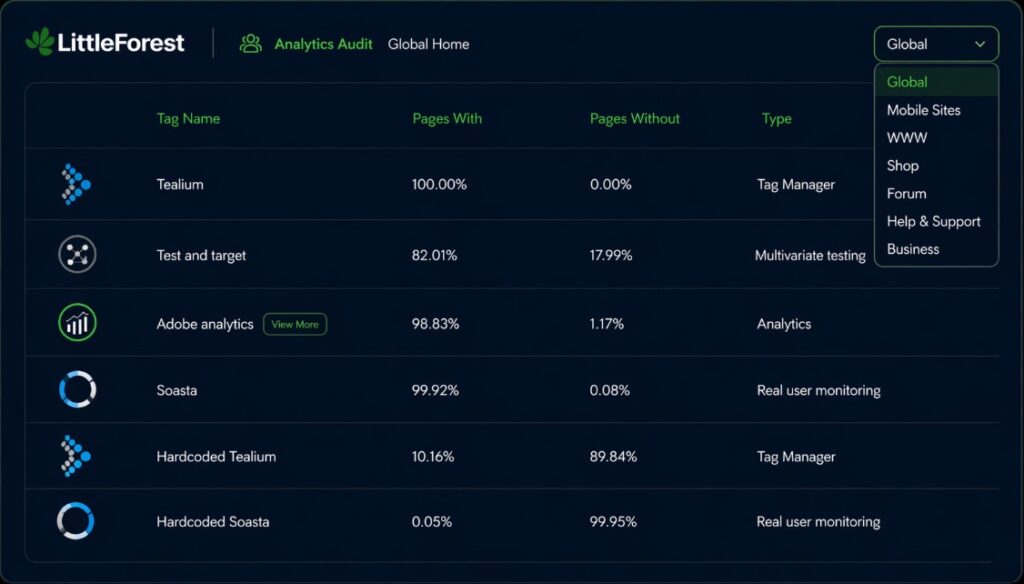
This is where web governance becomes cybersecurity. At Little Forest, one of the fastest ways we help teams tighten security posture is through technology audits (Tag Audits) across the entire estate:
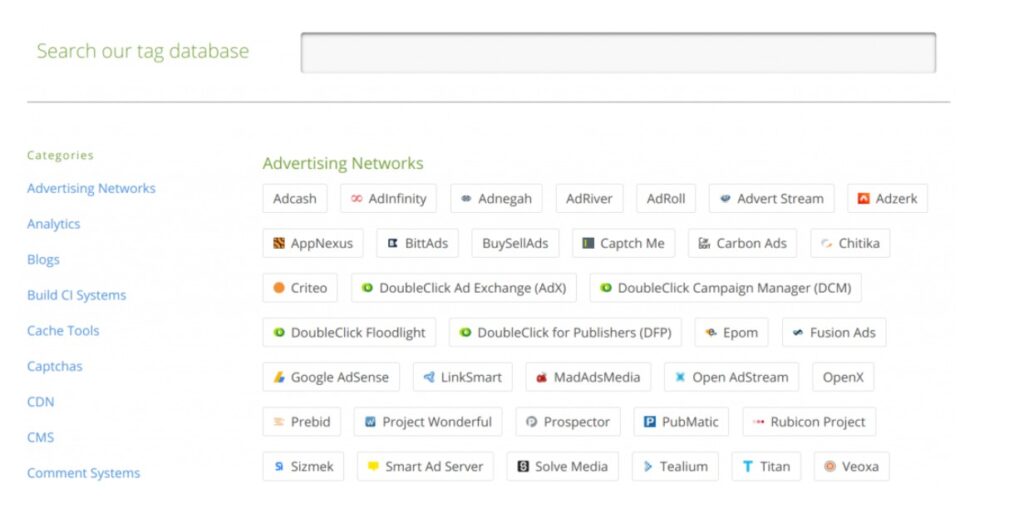
1) Tag Audit your estate: “What technologies are we actually running?”
We identify the technologies present across your sites – giving you a clear view of what’s in use, where, and at what scale.
This matters because when a major vulnerability hits a framework, library, CMS plugin, or third-party service, your first question becomes:
“Where do we have this running, and how quickly can we fix it?”
2) Turn the results into an action list, not a spreadsheet
Once you can see the technologies across the estate, you can start to prioritise:
- high-risk tech on high-traffic sites
- legacy tech on unknown-owner sites
- anything internet-facing that shouldn’t be (dev/test/staging)
- “critical business” sites that need fastest remediation
3) Fix ownership bottlenecks
Even strong security teams stall if ownership is unclear. A central registry + tagging helps route problems to the right people quickly , thus reducing the “we didn’t know that site existed” gap that attackers love.
4) Add continuous monitoring
AI-driven security capability doesn’t operate once a year it runs constantly. Defences need a similar rhythm: regular discovery, regular checks, and a way to see changes week to week.
Our procedure for this is more thoroughly explained in our previous article here: https://littleforest.co.uk/feature/tag-audit/
Why this matters for universities in particular
Universities are uniquely exposed because they combine:
- Very large, decentralised web estates
- Lots of legacy content and platforms
- Varied ownership across faculties and departments
- Frequent short-term project sites
- A strong public-facing mission (trust matters)
In other words: the perfect conditions for “unknown” tech to quietly exist until it becomes a liability.

The Next Frontier: Accessibility Intelligence, Not Just Compliance
While we’re seeing purpose-built AI models emerge for domains like security (systems that think like attackers) and code (models that reason like engineers), there’s a quieter gap opening up: accessibility still relies heavily on rules engines and general-purpose AI interpreting issues after the fact.
What comes next may be something more ambitious… An accessibility-focused model that doesn’t just “check” WCAG boxes, but understands barriers the way users actually experience them. Imagine AI that can read a page like a screen reader user (not just a DOM parser), flag cognitive overload (not just missing labels), distinguish intent versus implementation, and suggest fixes that are practical and scalable in context.
In short, the shift is from compliance-driven accessibility to experience-driven accessibility – and the organisations building true “accessibility intelligence” (not just testing tools) are likely to define the next era of the space.

Our take: this is a governance moment, not just a security moment
News like Mythos tends to trigger a very human reaction: “Okay… what are we supposed to do?”
The answer isn’t panic. It’s visibility and prioritisation.
If AI makes vulnerability discovery easier, then the organisations who succeed in this new era are the ones who can:
- see their whole estate clearly
- know what technologies are running where
- prioritise remediation based on exposure and importance
- coordinate owners without chaos
That’s exactly the problem web governance was made to solve.
Want help building a security-ready view of your web estate?
If you’d like to explore how Tag Audits + a web registry can help you identify exposure faster (and keep it under control as your estate changes), we’d love to help.📩 Email us at [email protected]