🗞️ Special Edition: “Things You Didn’t Know Your University Was Publishing” 🗞️
• Price: 1 Web Registry • Date: Whenever your next crawl runs…

🚨 BREAKING NEWS🚨
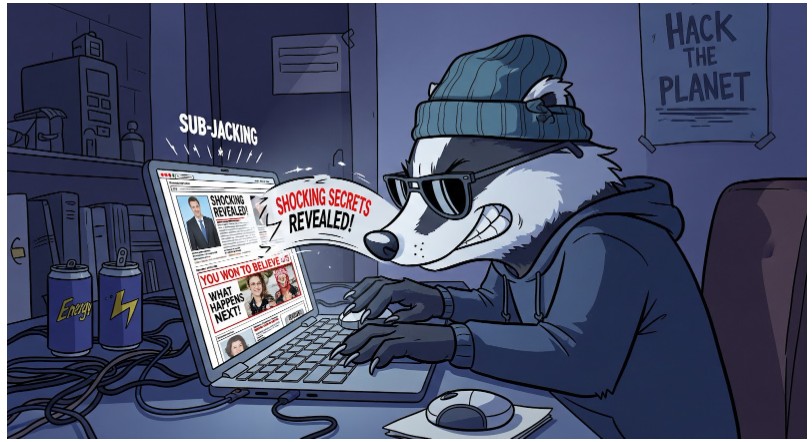
HAVE YOU BEEN SUB-JACKED!?
When Attackers Turn Your Subdomain Against You
By our Investigations Desk
A quiet subdomain. A forgotten DNS record. A harmless-looking URL under your trusted root domain… and suddenly your institution is hosting content you absolutely did not approve.
Not satire. Not theoretical. This is the real-world risk known as sub-jacking (a.k.a. subdomain takeover).
Editor’s Note: If your response to “sub-jacking” is “Is that a TikTok trend?” – you’re exactly the audience for this edition.
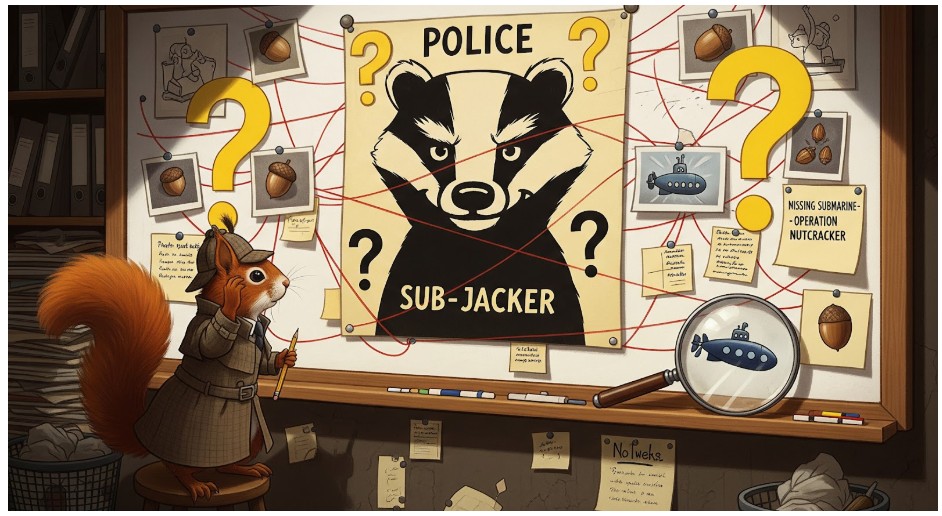
📌 WHAT EVEN IS “SUB-JACKING”?
Sub-jacking usually happens like this:
| First: The Setup | Second: The Oops | Third: The Takeover |
An organisation points a subdomain to an external service (a CMS, cloud platform, form tool, hosting provider, etc.). | That external service gets deleted, expires, or is misconfigured… but the DNS record stays. | An attacker claims the abandoned service and takes control of the subdomain. |
THE TWIST:
Because the subdomain still sits under your root domain, it looks completely legitimate to users and search engines.
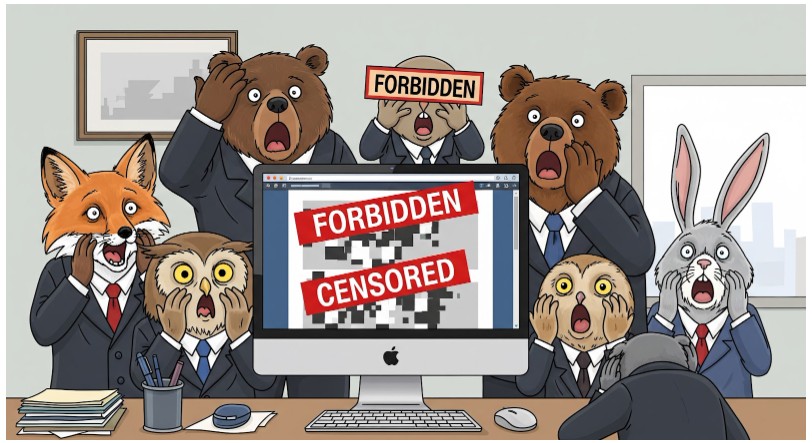
🧨 TODAY’S TOP HEADLINES 🧨
Worst-case scenarios… (told with a wink, but very real)
“GAMBLING PAGES FOUND UNDER UNIVERSITY SUBDOMAIN”
“ADULT CONTENT HOSTED ON TRUSTED DOMAIN”
“FAKE LOGIN PAGE STEALS CREDENTIALS – ‘LOOKED OFFICIAL’ SAYS USER”
“MALWARE DOWNLOADS SERVED FROM .AC.UK URL”
“SEO POISONING: SEARCH RESULTS NOW… WEIRD”
“SLANDER / EXTREMIST CONTENT HIDING IN PLAIN SIGHT”
Editor’s Note: The scariest part isn’t the content – it’s the trust. People believe it because it sits under your domain.
🕵️ FEATURE STORY 🕵️
FROM FORGOTTEN MICROSITE TO FRONT-PAGE SCANDAL
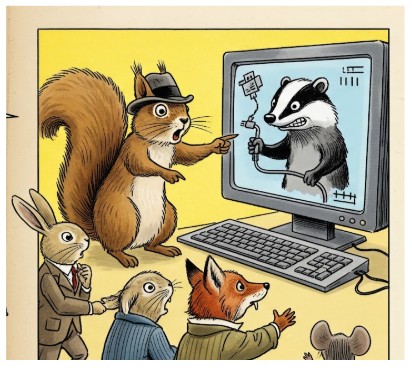
Web estates don’t shrink. They sprawl.
Universities launch campaign sites, research microsites, conference pages, “temporary” landing pages… and then move on. Meanwhile the URLs stay behind like ghost towns.
Without a registry, nobody can confidently answer:
- How many sites do we actually have?
- Which are live and public-facing?
- Who owns them?
- What’s sitting on them right now?
And that’s how the weird stuff slips through…
📣 OPINION PIECE 📣
“Isn’t this just a security issue?” – anonymous web estate owner
Not really. It’s a governance issue wearing a security costume.
Sub-jacking thrives when:
⚠️ DNS records outlive projects
⚠️ Offboarding never happens
⚠️ Ownership is unclear
⚠️ “That site” becomes “someone else’s problem”
Security teams can’t fix what the organisation can’t see.
🌬️ WEATHER REPORT 🧭
100% chance of web sprawl
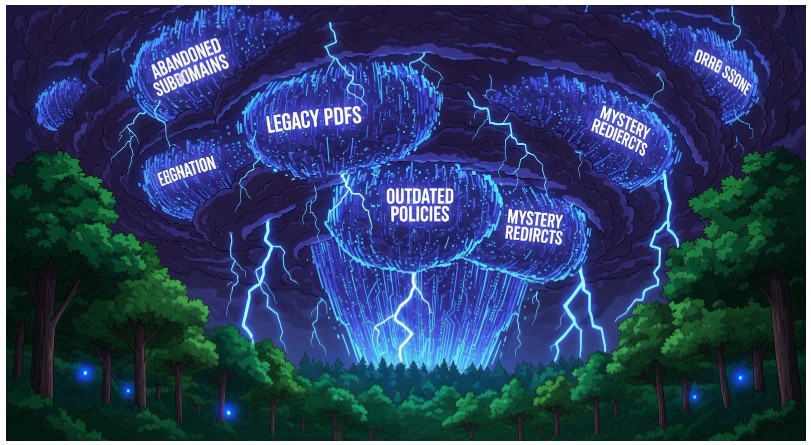
With a strong likelihood of:
⛈️ abandoned subdomains
🌧️ legacy PDFs
❄️ outdated policies
🌪️mystery redirect chains
🌤️“we didn’t know this existed” moments
Carry an umbrella (or better yet: a web registry!)
✅ THE SOLUTION SECTION ✅
HOW TO AVOID BECOMING THE NEWS
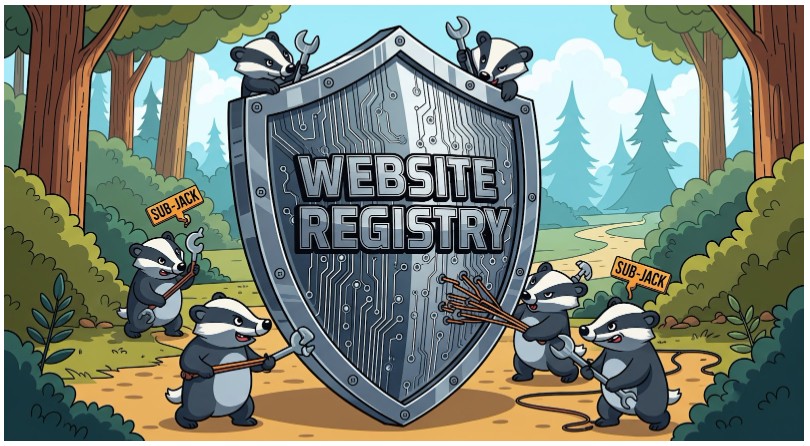
A proper Web Registry is the true hero of this story. It gives you a living map of:
- what domains/subdomains exist
- which ones are live
- who owns them
- what they contain
- what risk they represent
It’s the difference between “we think we’re fine” and “we know we’re fine.”
🛠️ HOW LITTLE FOREST HELPS 🛠️
Your anti-headline toolkit
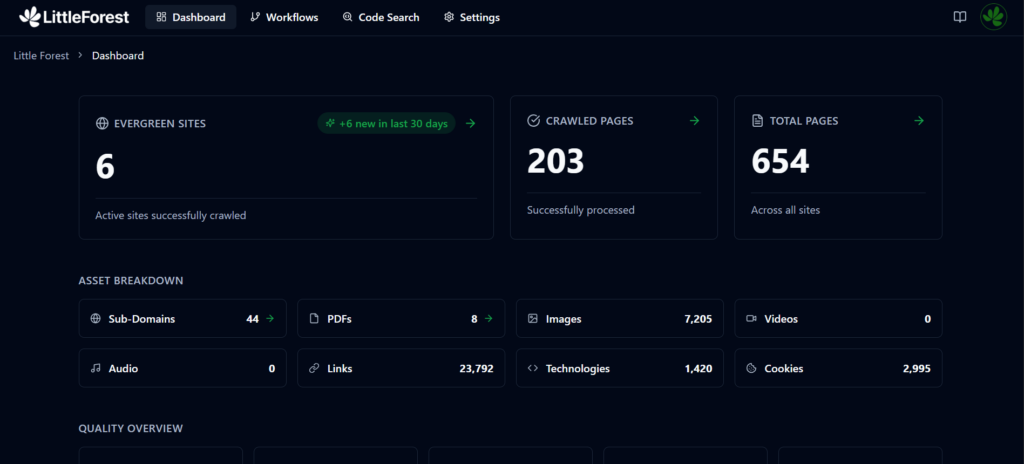
Little Forest helps you stay ahead of the chaos by:
🗓️ Weekly visibility
We inform you of new sites appearing across your web estate.
🧠 AI content analysis at scale
We can flag content that looks off-brand or risky – including topics you really don’t want associated with your institution.
🖼️ Visual proof (screenshots + registry views)
Sometimes the fastest detection method is simply: “that does not look like us.”
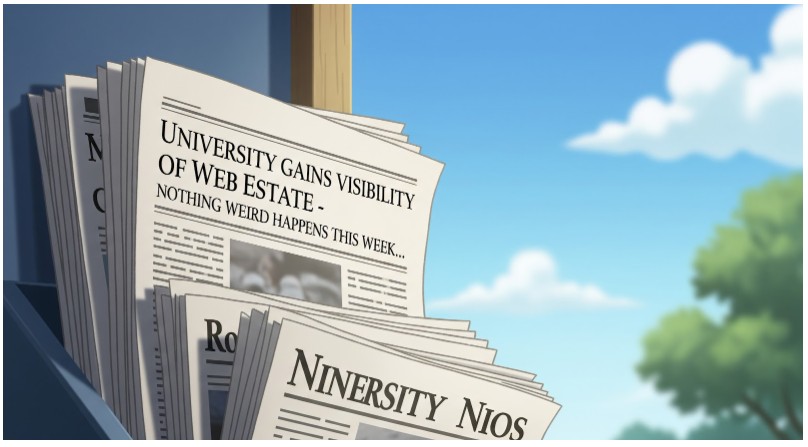
📰 TOMORROW’S DREAM HEADLINE 📰
“UNIVERSITY GAINS VISIBILITY OF WEB ESTATE – NOTHING WEIRD HAPPENS THIS WEEK…”
Not as clicky, but significantly better for everyone’s blood pressure.
🛡️ Want help building your registry and spotting risks early to avoid front page scandal?
We can be your shield, email [email protected]