When you first map a university’s web estate, it can feel like stepping into a forest at night with a small torch.
You ask the simple question of “How many websites do we have?” and the answer comes back as a number so big it’s borderline unhelpful. Thousands of domains and subdomains. Old microsites. Half-remembered research pages. Things that look like websites, things that definitely aren’t, and a long tail of “what even is that?!”At Little Forest, we’ve worked across more than 50 universities and large organisations, and the pattern is remarkably consistent. When you analyse a full web estate, the headline number is often huge. But once you start to look more closely, a different picture emerges. We see this all the time and it’s exactly why we started using (and loving) the term Evergreen Sites.🌲
The idea in one sentence: 💭
Evergreen Sites are the websites you can rely on – the strong, year-round trees you actually want to care for and invest in.
Not because everything else is irrelevant forever, but because if you treat your entire forest like it’s equally important, you’ll burn out before you make progress.

Why your site count is almost always misleading 📈
Here’s the pattern we keep seeing:
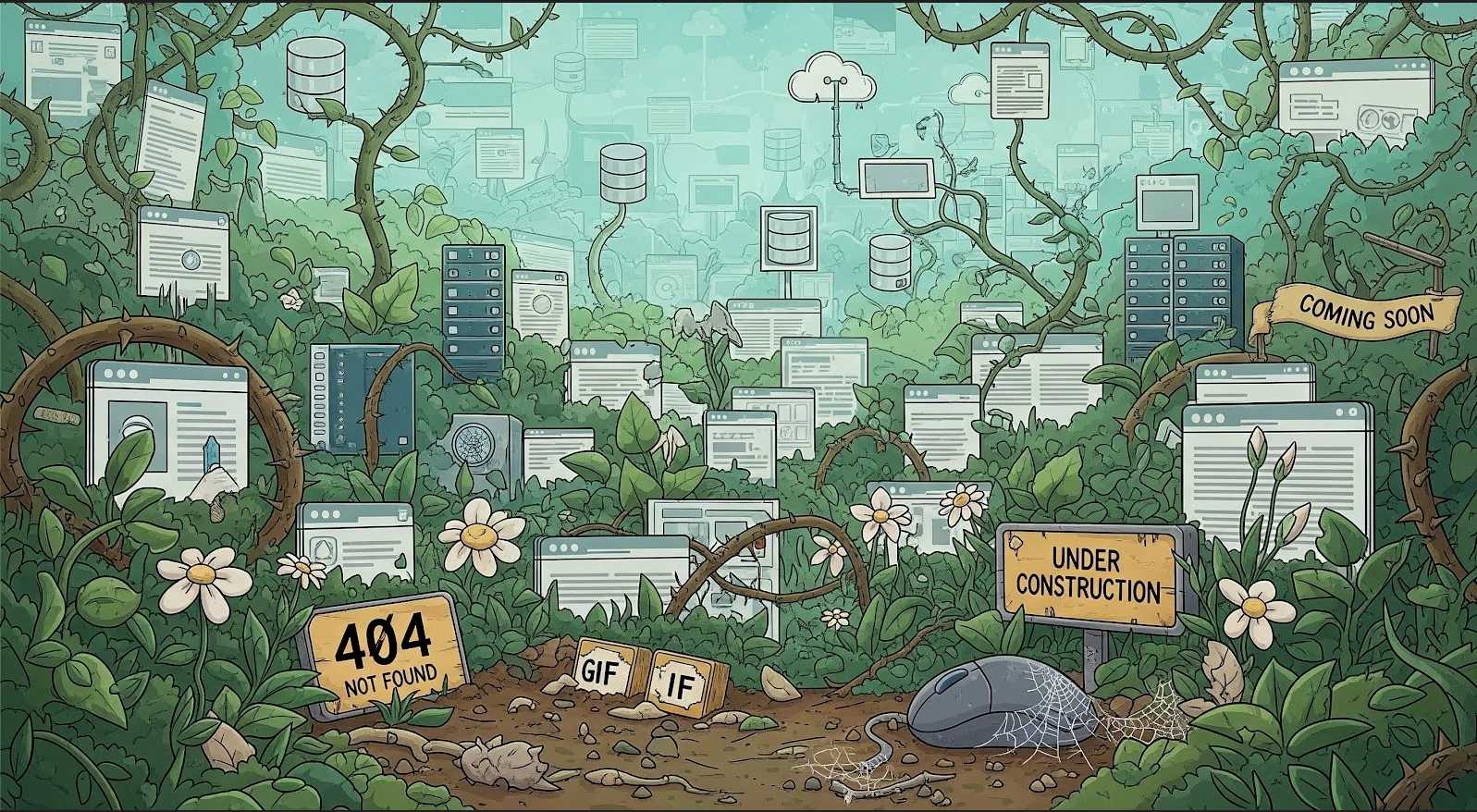
You might discover 8,000 “sites” across an estate… but when you test them, only a fraction actually resolve to a real, accessible, public-facing website.
The rest are usually some mix of:
- subdomains that no longer point anywhere useful
- systems and administrative endpoints
- old environments that were never meant to be public
- development/test/staging sites that keep showing up in DNS
- things that used to exist and now just… haunt the dataset
This is weirdly good news. It means the “beast” is often smaller than it looks, you just need a way to separate signal from noise. Think of it like surveying a forest. At first glance, it’s dense and impenetrable. But once you clear the undergrowth, you can finally see the trees that truly matter.
A lot of institutions have described their web estates as having evolved “organically,” which is a polite way of saying: things grew quickly, in lots of places, and not always with a central map.

Evergreen is a focus lens, not a judgement 🔍
The Evergreen Sites concept isn’t meant to shame the long tail. It’s a way of saying:
“Let’s focus first on the part of the forest that people actually walk through every day.”
When you tag a site as evergreen, you’re basically saying this site:
- Matters to the organisation
- Is meant to be found
- Has a real audience
- Is expected to be maintained
- Should be accessible, secure, and trustworthy
You’ll still have hundreds of Evergreen Sites in many universities – research alone can create a huge ecosystem of important microsites – but “hundreds” is a far more governable number than thousands of unknowns.
How we get from “everything” to “evergreen” ⛳
We tend to think of this like clearing paths through the forest.
- First pass: What actually resolves?
Start wide. Use domain discovery to surface every known site across the estate. You don’t need deep analysis on things that don’t load, don’t exist, or clearly aren’t public websites. - Second pass: What’s clearly dev/test/admin?
There are patterns you can spot (“dev.” “test.” “staging.” “cpanel”) but there’s also nuance; especially in research contexts where “test” might genuinely be a lab term. That’s why we treat tagging as guided, not purely automatic. - Third pass: Which sites feel real and important?
This is where Evergreen starts to emerge: the sites with clear purpose, content, and an identifiable audience.
In Little Forest, we support this with tagging and filtering so you can progressively narrow the estate until you’re looking at the set of sites you actually want to manage as a programme.

What changes once you’ve found your Evergreens🌲
Without this mental model, we see organisations often fall into one of two traps:
Trap 1: Trying to treat every site equally ⚠️
This spreads teams too thin and slows meaningful progress.
Trap 2: Ignoring the long tail entirely ⚠️
This creates unmanaged risk and blind spots.
Evergreen Sites provide a practical middle path.
This is the real payoff: Evergreen Sites are the set you can actually improve and prioritise.
Once you have them, you can confidently:
- Crawl them deeper and more frequently
- Clarify ownership work (who is directly responsible, who needs support etc.)
- Run richer accessibility and governance reporting
- Start a sustainable rhythm of review and improvement, with measurable progress
And crucially; you can stop wasting time on the undergrowth.
A lot of governance guidance (inside and outside higher ed) recommends having clear ownership and review cycles; because content and sites tend to hang around long after they’re useful unless someone is accountable for upkeep.

Why this matters for accessibility and risk 🚨
Evergreen Sites aren’t just “the nice ones.” They’re where your biggest user impact lives.
They’re also where your biggest organisational risk tends to concentrate: the pages that people rely on, and the ones most likely to be scrutinised for accessibility, privacy, and security.
Separate research on university website portfolios highlights how unmaintained sites expand the attack surface and create security risk – which is exactly why it helps to distinguish what should be actively maintained and governed.
This is particularly important in accessibility and compliance work.
Running deep accessibility scans, AI analysis, ownership outreach, and training across every discovered domain is rarely realistic at scale. Evergreen Sites are clarifying: “These are the sites we will keep healthy.” In other words, they are where governance work delivers the greatest impact.
Everything else becomes either something to:
- retire or archive,
- demote in priority,
- or investigate later without derailing the whole programme.

Making “Evergreen” a shared language 🗣️
Part of why we want to popularise this term in the accessibility and governance world is simple: it helps teams talk to each other.
When everyone can say: “That’s an Evergreen site so it needs proper ownership and review.” In doing so, we reduce ambiguity, confusion, and the endless “who’s responsible for this?” loop.
It also makes it easier to build a community of site owners because you’re inviting people to care for the sites that truly represent the organisation year-round.

The Human Layer: Building a Community of Owners🤝
One of the most important insights we’ve seen across universities is that Web estates are people problems as much as technical ones.
Evergreen Sites give you a clear map of who really matters in your digital ecosystem. Once identified, organisations can: find business owners, clarify accountability, build communities of practice, and support teams with training and guidance
Instead of one central team trying to fix everything, responsibility becomes distributed and sustainable – just like a healthy forest ecosystem.
The goal isn’t a smaller forest – it’s a healthier one 🏕️
Your web estate will probably always be a forest. That’s normal, especially in universities.
But you can choose whether it’s a confusing wilderness… or a place with clear paths, healthy trees, and a set of evergreen sites you’re actively nurturing, thus creating a web estate people can actually navigate and trust.
If your organisation is struggling to understand the true shape of its web estate, you’re not alone. Most institutions we work with start in exactly the same place.
If you want help identifying your Evergreen Sites and turning your estate into something you can actually manage (without living in spreadsheets), we’d love to help. 📩 [email protected]