Search is changing, fast.
The waters have shifted. There’s a new tide pulling users across the sea:
AI systems which answer questions before anyone ever reaches your shoreline.
For the first time in 20 years, websites are losing traffic not because their SEO is slipping, but because users are bypassing websites altogether and going straight to AI systems like Google’s AI Overview, ChatGPT, and Gemini.
This shift has created a new urgency:
‘How do we make sure our content is visible, discoverable, and cited in an AI-driven world?’
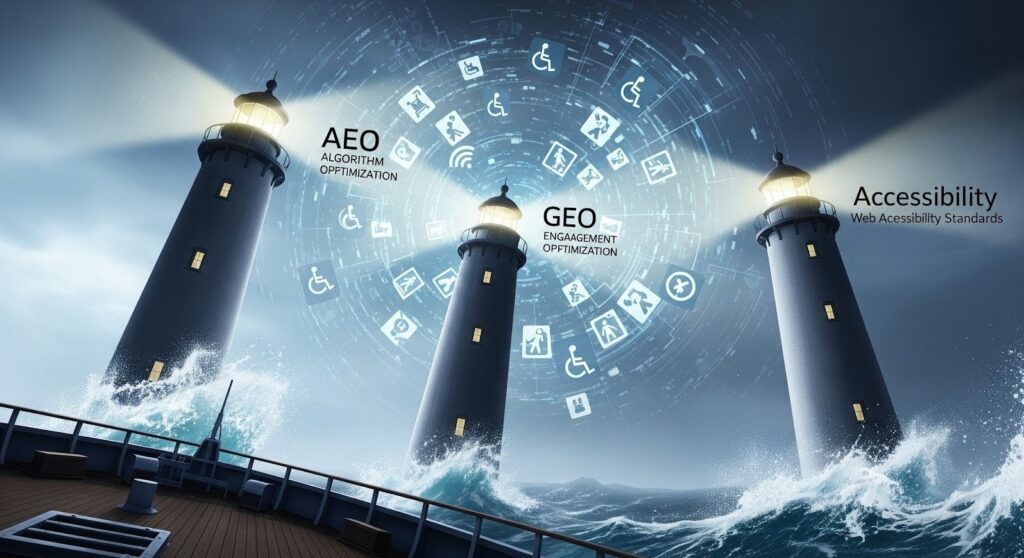
Welcome to the age of AEO (Answer Engine Optimisation) and GEO (Generative Engine Optimisation) – advancing the art of making your website become the lighthouse shining through the immense digital fog. Fortunately, AEO and GEO overlap heavily with long-established accessibility best practices.
🌊The Changing Tide: Why Websites Are Losing Traffic to AI
Website owners everywhere are asking the same question:
“Our SEO is strong, so why are our page views dropping?”
Because users aren’t clicking through anymore. Google’s “AI Overview” presents instant answers without requiring a visit. ChatGPT and Gemini summarise entire topics without showing traditional search results.
In both cases, AI systems are scraping, analysing, and summarising your web pages while referencing whichever sources they understand best. If you’re not optimised for AI, you disappear from the conversation, like a ship in a deep fog searching for the coastline.
Your website might still be running but the unpredictable storms of algorithm updates can drown it out unless the site structure itself is optimised for machine understanding. Structure becomes the lighthouse to guide the users, and AI bot ships, to your website.
🗺️ Two New Navigation Systems: AEO & GEO
1. AEO (Answer Engine Optimisation)
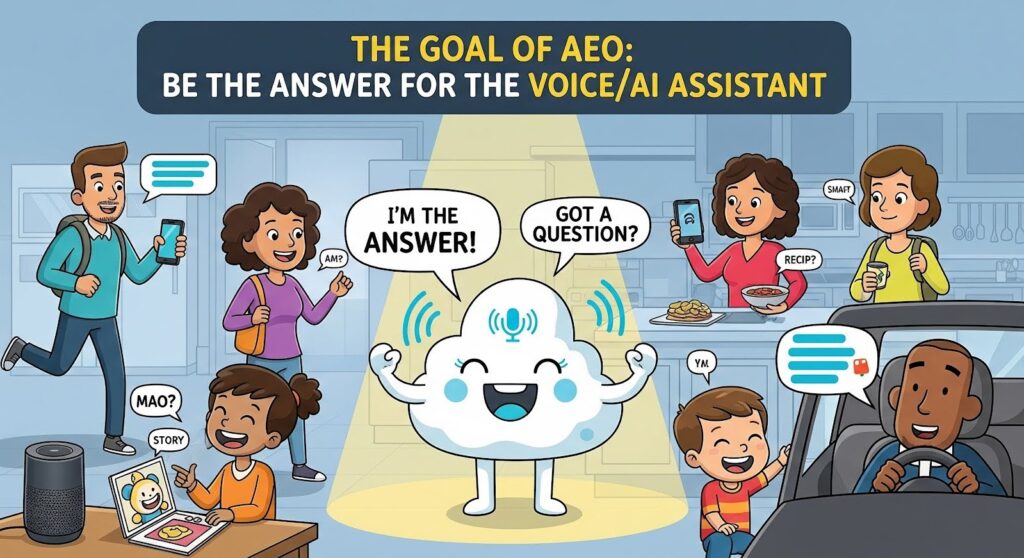
This is about getting your content into the AI Overview box in Google search.
When you type a question into Google and it switches into “AI mode” with a long, rich, summarised answer – that’s AEO.
Your goal with AEO:
Become the source that Google uses when generating those summaries.
Think of it as ensuring your lighthouse beacon appears on Google’s newest nautical chart.
2. GEO (Generative Engine Optimisation)
This is about being cited inside tools like: ChatGPT, Gemini, Bing Copilot etc.
E.g. Imagine someone asks these tools: “Which university has the best marine biology program in the UK?”
You want AI to say:
“According to [Your University’s Website]…” or reference your website in its sources used.
Your goal with GEO:
Be understood, used, and cited by generative AI systems.
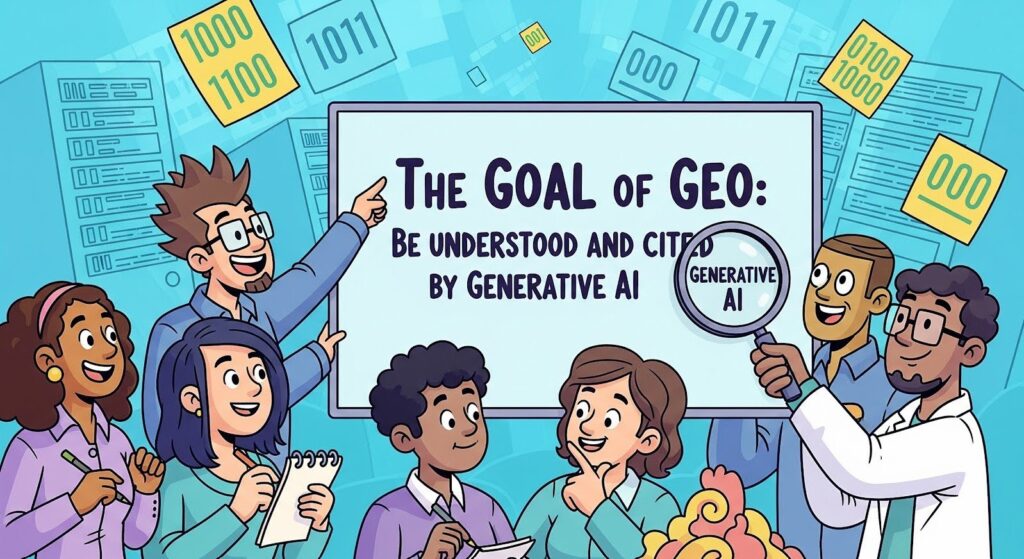
Both forms of optimisation matter because they help ensure your website still matters in an evergrowing AI-first browsing environment. It’s like getting your lighthouse location added to every AI captain’s handbook.

🛠️ How to Make Your Lighthouse Visible to AI
Generative and answer engines are surprisingly open about what they want from you.
AI needs structure, clarity, and signposts – not marketing fluff.
Here’s the core list you can checkoff to help it “see” your lighthouse through the storm:
🌤️ 1) Use Semantic HTML – Clean Architecture for your Beacon
This means using proper:
- <header>
- <footer>
- <nav>
- <main>
- <section>
- <article>
- <h1>, <h2>, etc.
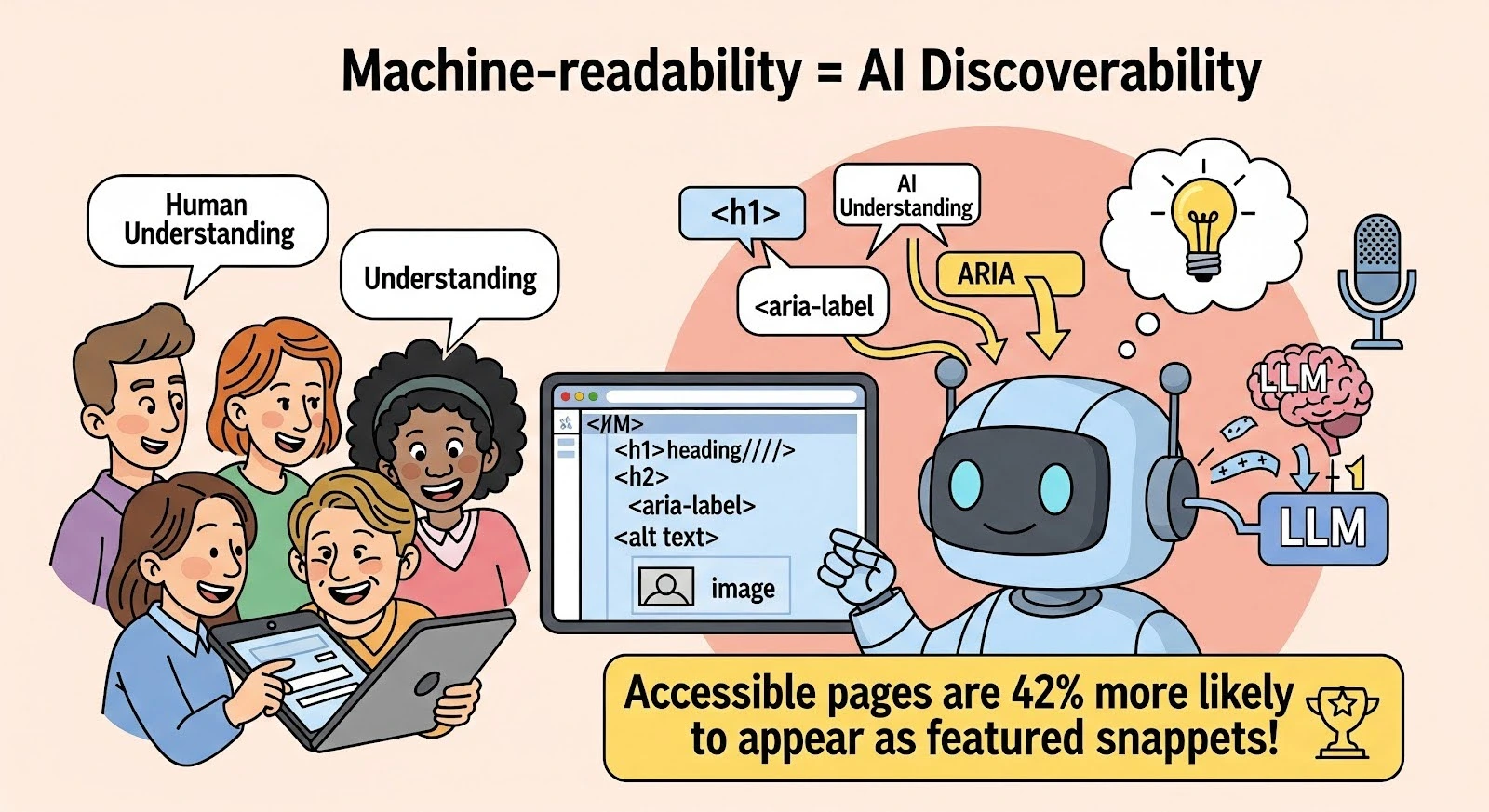
This helps machines “read” your page structure – exactly like accessibility standards require; acting as the blueprint AI uses to understand your content.
🌟 2) Use Structured Data – the Lighthouse Coordinates
Schema.org is your GPS system. Be sure to mark up pages with appropriate:
- Organisation schema
- Article schema
- Product schema
- Event schema
- FAQ schema
This is one of the fastest ways to signal meaning to AI systems.
🔦 3) Add an ai-plugin.json file – the Official Lighthouse Manual
AI agents can read a site-level JSON file that outlines:
- Who you are
- What your site is about
- What content exists
- Which APIs or resources are allowed
This dramatically improves AI understanding. A small file. A huge signal boost.
⚠️ 4) Don’t block AI in robots.txt — Keep the Lighthouse Door Open
Many organisations unknowingly hide their beacon:
User-agent: ChatGPT-User
Disallow: /
or
User-agent: Google-Extended
Disallow: /
If AI can’t crawl, it can’t cite you. So you will never appear in AI tools. The gate must stay open for the light to shine.
📚 5) Clear and factual writing – Cut through the Fog
AI summarises mercilessly.
The simpler and clearer your sentences and language, the less likely your meaning gets distorted in the fog. Make it as transparent as possible, this also means:
✅ Including metadata (author, date, organisation)
AI uses metadata to assess credibility.
🐚 Where Accessibility Meets AI (A Lighthouse Must Serve Everyone)
Accessibility is one of the strongest foundations for AI optimisation.
What’s beautiful here is that the same principles that help people with alternative needs
also help AI engines navigate your site.
Accessibility = machine readability
Machine readability = AI visibility
Examples:
- Alt text
→ Tells screen-readers and AI what your images depict. AI cannot cite or use your image content without it. - Headings (Page title – H1, Topic section – H2, etc.)
→ Screen readers rely on headings. Help blind users and AI understand page structure and which parts are most important. This dramatically improves summarisation. - Landmark regions
→ Give users and AI predictable navigation patterns via proper <header>, <nav> and <footer> for when the layout is clear to machines, AI can extract information accurately. - Readable language
→ Helps everyone, including generative models.
If accessibility makes your site welcoming for humans to hop onboard, AI optimisation makes it visible across the entire digital ocean.

🎓 A Note for Universities (This Is Especially Important for You)
Universities don’t have small websites – they have vast coastlines whose web estates and academic content depend heavily on search visibility. Such as:
- multiple CMSs
- decentralised content creators
- thousands of images
- decades-old PDFs
- program pages that must stay visible to students
- critical research output
- high competition for applicants
- search-dependent web journeys
If AI can’t understand your pages, it can’t recommend your programs, your research, your courses, or your institution.
Your prospective students are now asking ChatGPT:
- “Which UK universities have strong psychology courses?”
- “Best universities for philosophy in Scotland?”
- “What is UCAS clearing?”
If your content does not appear in those answers… You lose that student long before they ever Google you. If your lighthouse isn’t shining in AI systems, you disappear before the journey begins.
AEO/GEO visibility is becoming as important as SEO was in 2010 and universities with well-structured, accessible sites will be the ones AI elevates.
⚓ Final Thoughts: AI Isn’t Extinguishing Your Lighthouse – It’s Changing the Weather and Shifting the Tides
The coastlines aren’t disappearing.The ships aren’t vanishing.
But the fog has rolled in, and AI is now guiding the journey.
The shift from “Search Engine Optimisation” to “Answer & Generative Engine Optimisation” is already happening. The solution is not to panic, only to adapt.
If you’re not present in the AI ocean, you may lose potential traffic, like ships passing in the night…. No matter how strong your SEO is….
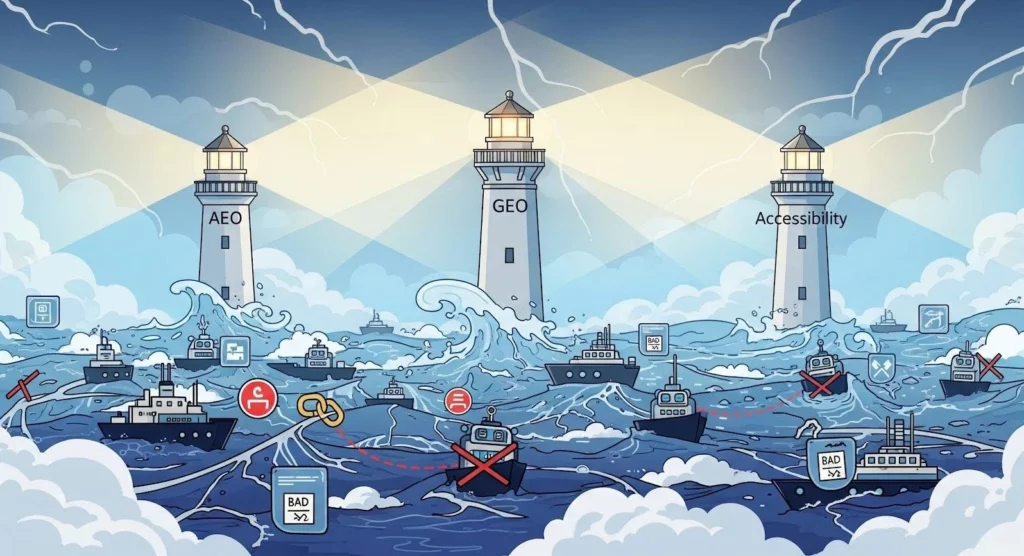
AEO + GEO + Accessibility = AI-Ready Web Content
This is the future of visibility.
If you want help assessing your AI-readiness or implementing AEO/GEO improvements across your web estate, Little Forest can help you remain discoverable through:
- AI-optimised structure to your content
- Better machine readability
- Proper accessibility foundations
- AI-safe robots.txt configurations
- Allow AI crawling
- Structured data and semantic markup
- And the governance needed to keep everything consistent
Your lighthouse already has the power to shine. These classic accessibility practices simply help its beam cut through the new AI mist.
And if you’d like some help mapping your coastline and strengthening your beacon,
Little Forest is here to guide you. Just reach out. Or email [email protected]